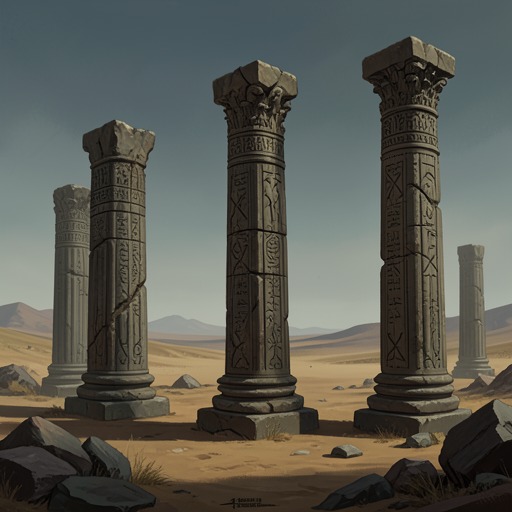
Agartha’s decline and isolation
5 Centimeters per SecondAgartha’s decline and isolation are the legacy of repeated exploitation by the surface: rulers took its wealth and techniques, wars followed, and its once-magnificent cities were destroyed. Reduced to a few villages and without military might to defend itself, Agartha closed its gates against the Topsiders. The closure protects what remains, but the people’s history of violence makes reopening the way a threat to their fragile peace.
Former Prosperity and Historical Plunder
The account of Agartha’s past is delivered by an elder who explains that surface emperors and kings plundered its wealth and techniques over several centuries. They wanted Agarthan knowledge and riches to help control the surface; in return, Agartha was drawn into wars. Its cities had once surpassed those on the surface in magnificence, but all were destroyed, and the population dwindled until only a few villages remained.
The matriarch describes the same history as a bitter inheritance: Agarthans were shot, murdered, and robbed. The loss was not only material. They had possessed a power rarer than military might, yet had no armed strength with which to defend themselves from the invaders. Their former prosperity therefore sharpens the contrast with their present vulnerability: the people whose knowledge was coveted could not prevent their cities from being ruined.
Sealed Gates and the Fear of Return
In response to that history, Agarthans used the claves to close the doors and keep Topsiders from entering. The barriers are presented not as an arbitrary rejection of outsiders but as a defense shaped by remembered conquest. The matriarch warns that if the gate is opened, Topsiders will flood into Agartha again and the community’s peace will be lost. Isolation is thus both a consequence of past incursions and a deliberate safeguard against their return.
That safeguard is precarious. The matriarch acknowledges that Agartha no longer has the military power to protect itself from another invasion, while its people cannot simply forget the suffering inflicted on them before. Closing the gates preserves distance from the surface, but the fear behind the decision remains active: the possibility of renewed entry shadows any prospect of contact.
A Long Twilight
The matriarch characterizes the present as a long twilight, with Agartha’s earlier prosperity now remote. She says that the people desire to dissolve into Astral, described as the endpoint of all life. This longing places their decline alongside their isolation: the community is not merely guarding a diminished home from external danger, but living with the sense that its former world has passed away.
The contrast between destroyed cities and surviving villages gives the sealed gates their broader significance. They mark the point at which protection became withdrawal, after Agartha’s knowledge and wealth had made it a target rather than secured its future. The people’s hope for peace and their wish to dissolve into Astral emerge from the same history of loss, without any promise that the gates alone can restore what was taken.